There are no items in your cart
Add More
Add More
| Item Details | Price | ||
|---|---|---|---|

A Bible Study on Psalm 139:23–24
By Yvonne Brooks
“Search me, O God, and know my heart: try me, and know my thoughts: And see if there be any wicked way in me, and lead me in the way everlasting.”
—Psalm 139:23–24, KJV
Have you ever noticed that different situations seem to awaken the same fear?
A delayed response makes you wonder whether someone is upset with you. An unexpected expense brings back the thought that you will never have enough. A new opportunity stirs the familiar question, What if I am not capable?
The circumstances change, but the inner conversation sounds familiar.
Recognizing these patterns is not an invitation to criticize yourself. It is an opportunity to ask God for understanding—and to begin choosing your responses more intentionally.
You do not have to condemn your soul to become honest about what is happening within it.
1. Begin With an Invitation, Not an Accusation
Psalm 139 opens with David acknowledging that God already knows him. God knows his actions, thoughts, and words. By the end of the psalm, David willingly invites that searching knowledge into his life:
“Search me, O God.”
David is not giving God information He lacks. He is opening himself to God’s examination and guidance.
We can approach our fear patterns with that same willingness:
“Father, help me recognize what I have not understood.”
“Show me where fear is influencing my choices.”
“Help me distinguish wise caution from an assumption that keeps me from moving forward.”
Although this passage is not exclusively about fear, its invitation to examine our hearts provides a meaningful foundation for this study.
And while David asks God to expose any wicked way, we should not assume that every experience of fear is a sin. The question is also how we respond to fear and whether our responses lead us toward truth, love, and obedience.
2. Notice What Repeatedly Awakens Fear
A personal fear pattern is a recurring way you interpret and respond to situations that feel threatening or uncertain.
Begin by noticing specific moments.
Perhaps fear appears when:
Someone disagrees with you.
You are asked to do something unfamiliar.
You cannot predict an outcome.
You need to discuss money.
Someone important seems distant.
You must set a boundary or ask for help.
These situations do not carry the same meaning for everyone. What feels manageable to one person may touch a painful experience for another.
Rather than saying, “I am afraid of everything,” ask:
“When does this fear become most noticeable?”
Specific observations give you something concrete to bring into prayer.
3. Listen to the Meaning You Give the Situation
Often, the event and our interpretation of the event are not the same thing.
The event may be: My friend has not returned my call.
The interpretation may be: I no longer matter to her.
The event may be: I made a mistake.
The interpretation may be: I cannot be trusted with anything important.
The event may be: This month requires a financial adjustment.
The interpretation may be: My future will always be insecure.
The concern may deserve attention, but the conclusion still needs examination.
Ask yourself:
What happened—and what did I tell myself it meant?
Then ask:
What evidence supports my interpretation? What else might be true?
Seeking truth does not require pretending there is no problem. It means refusing to treat every fearful conclusion as an established fact.
4. Recognize Your Familiar Response
Fear does not always look like retreat. Sometimes it appears in behaviors we have learned to call responsibility, kindness, or preparation.
For example:
Overcontrolling: “If I manage every detail, nothing can go wrong.”
People-pleasing: “If everyone is happy with me, I will not be rejected.”
Avoiding: “If I do not face the situation, I will not have to feel uncomfortable.”
Overpreparing: “I must be completely certain before I begin.”
Withdrawing: “If I stop letting people close, they cannot disappoint me.”
Planning, generosity, privacy, and careful preparation can all be wise. Their presence does not automatically mean fear is in control.
The revealing question is:
“Am I choosing this response freely and wisely, or do I feel driven by an outcome I am desperate to prevent?”
5. Ask What the Pattern Is Protecting
Beneath a recurring fear, there may be something deeply important to you: belonging, stability, dignity, safety, or the well-being of someone you love.
You may also recognize a connection to a previous disappointment.
Perhaps being overlooked makes disagreement feel like rejection. A season of financial hardship may make ordinary uncertainty feel especially threatening. A broken promise may make it difficult to trust a new commitment.
Do not force yourself to discover one explanation for every fear. Begin with what you can honestly observe.
“Lord, I notice that uncertainty feels especially difficult for me.”
“Father, I care deeply about this relationship, and I am afraid of losing it.”
God’s searching is not an invitation to endless self-interrogation. The prayer ends with direction: “Lead me.”
Understanding is valuable because it can help us take a wiser next step.
6. Practice a Different Response
Recognizing a pattern creates room to respond differently.
If you usually agree because you fear disapproval, your next step might be a respectful boundary.
If you usually avoid a financial conversation, your next step might be scheduling a calm time to review the facts.
If you usually assume rejection, your next step might be asking a clear question instead of withdrawing.
If you usually delay until you feel completely confident, your next step might be beginning with a small, responsible action.
You may still feel afraid while making a different choice.
Psalm 56:3 expresses trust in the presence of fear—not only after fear has disappeared. Courage can look like taking one faithful step while asking God to help you.
A Personal Fear-Pattern Reflection
Choose one recent situation and complete these sentences:
The situation was:
I was afraid that:
The meaning I gave it was:
My usual response was:
That response helped me—or cost me—in this way:
A truth from Scripture I want to remember is:
A wiser response I can practice is:
For example:
When someone asks me to take on another responsibility, I fear disappointing them. I assume saying no will damage the relationship. I agree, then become overwhelmed. I can practice speaking truthfully and lovingly, remembering Ephesians 4:15.
Faith Questions to Ponder
What fear has appeared in several different areas of my life?
What do I tend to assume when I feel uncertain?
What am I trying to prevent through my usual response?
Is this response helping me live truthfully and lovingly?
What am I reluctant to let God examine?
Who could offer trustworthy perspective and support?
What small response can I practice differently this week?
Closing Prayer
Heavenly Father,
Search me and know my heart. Help me recognize the fears I have learned to overlook and the assumptions I have mistaken for truth.
Show me where fear is influencing my decisions, relationships, and expectations. Help me receive Your correction without turning it into self-condemnation.
Give me wisdom to recognize real concerns, courage to ask honest questions, and humility to receive support.
Where I have tried to control every outcome, teach me trust. Where I have remained silent out of fear, help me speak with love. Where I have avoided a necessary step, guide me forward wisely.
Thank You that I am fully known by You. Lead me in the way everlasting, one faithful step at a time.
In Jesus’ name, amen.
Today’s declaration:
With God’s help, I can recognize my fear patterns without condemning myself. I can examine my assumptions, receive guidance, and practice a wiser response.
Yvonne Brooks
parentingwithloveacademy.com
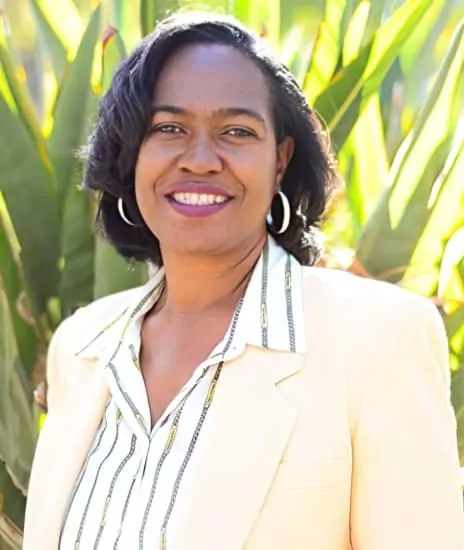
Yvonne Brooks
Author, Speaker and Philanthropist.
 Launch your Graphy